
Rediscovering the Etruscan Coast
Chapter Four of Across Europe's Heart: A Ligurian Adventure
Keith Pryke
2/5/20263 min read
It was an early 7.30am start, with the morning overcast as I left the city. This morning is Sally's chance to redeem herself after that shaky drive into Genoa—let’s see how she handles Tuscany’s curves!
Today would be a chance for me to revisit some old haunts as I’d be heading back to San Vincenzo, a small town on the Tuscan coast just above Piombino. It was here, at Camping Park Albatros, that I’d been based for my final two years in Italy as a maintenance engineer, watching the site grow as a new development just outside the town, which was also undergoing an upgrade with the construction of a new marina. After 15 years away, I was eager to see how it had evolved.
I headed for the autostrada, driving south past La Spezia and Livorno, where a light rain brushed the windscreen for a stretch before clearing. One of my memories of driving along this stretch of motorway was how the central reservations were full of oleanders, bursting with pink and white blooms. Today, the lush green leaves were still there, but unfortunately, it was too late in the year to see the mass of beautiful flowers they produce.
My first stop was the Gulf of Baratti, a beautiful sweeping bay with soft sand and Mediterranean pines (my favourite trees) covering the landscape. Beyond the bay lies the Parco Archeologico di Baratti e Populonia, a site that showcases the Etruscan history of this area, dating back over 2,500 years. Perched high on a hill within the park lies the ancient, picturesque village of Populonia, which offers commanding views of the coastline in both directions. It’s a village I used to come to often to take in the sunsets and enjoy an aperitivo in one of the little bars. Thankfully, everything was just as I remembered; it hadn’t been overdeveloped, and the natural beauty of the area still remained.
Only ten minutes from Baratti brought me to San Vincenzo, my old hometown. Unfortunately, time hadn’t been as kind here; the area around the campsite and the town itself looked run-down, with weathered signs and peeling paint, as if the development had been completed, but then left to fade in the hot Tuscan sun. Disappointed, I realised I’d caught it at its peak back in 2008—I’d certainly had the best of it.
I didn’t linger for long and began heading back towards Genoa, deciding to seek solace at an Autogrill on the E80 near Rosignano Marittimo—a stop I’d craved since entering Italy. This didn’t disappoint; the coffee was rich and reviving, a nod to Autogrill’s legacy as Italy’s pioneer of roadside dining since 1947, when it opened its first rest stop to cater to the post-war boom of travellers. It’s been serving great quality food at a great price ever since, and it’s become an Italian institution. The prices had certainly increased since my days here, but the quality remained. The panini I had was a toasted masterpiece of Parma ham, buffalo mozzarella, and fresh basil, and was worth every cent.
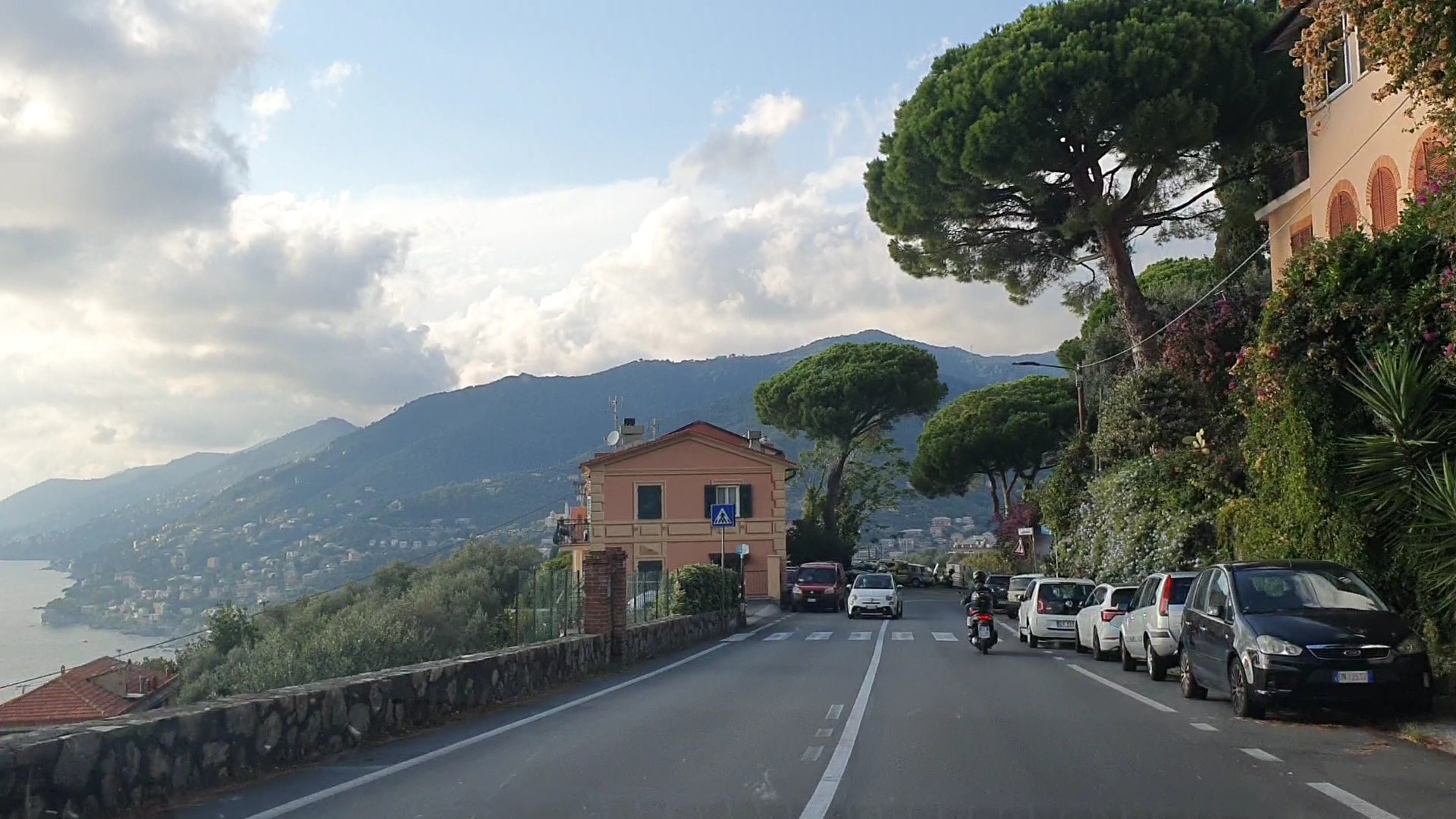
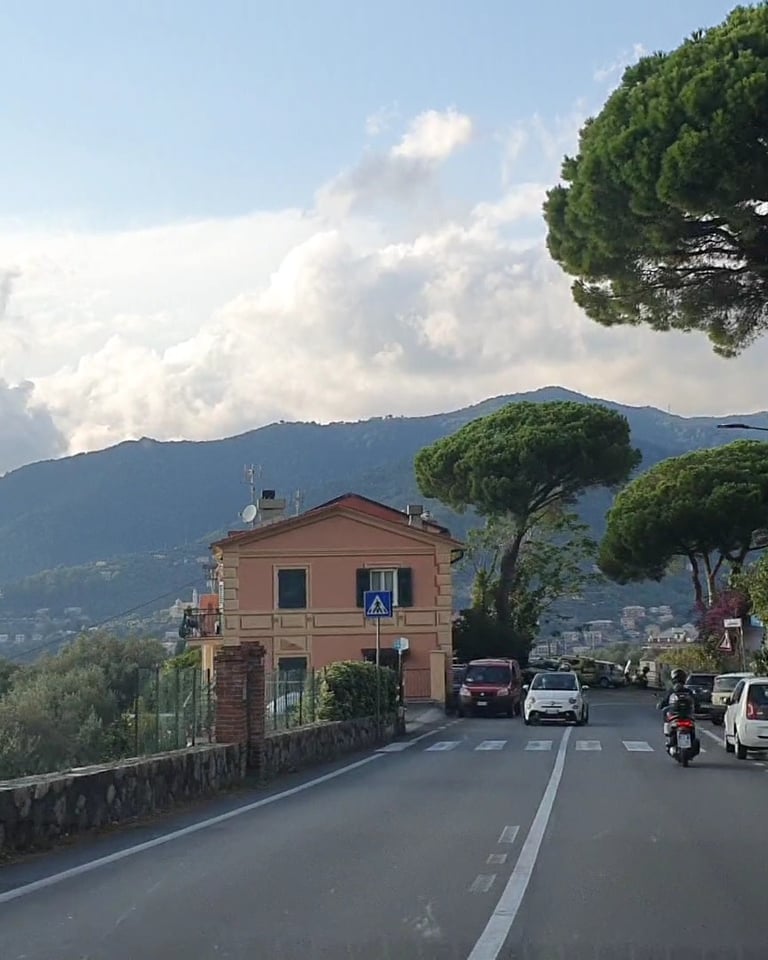
Refuelled, I exited the autostrada at Marina di Carrara, taking the scenic SP 28 past Ameglia and Zignago towards Lerici and the Bay of Poets, where La Spezia nestles. The sun broke through the overcast sky, lifting my mood as the road’s sweeping bends unveiled stunning Mediterranean views, with pine-clad forests, and little in the way of urbanisation. The Bay of Poets earned its name from the 19th-century Romantics—Lord Byron, Percy Bysshe Shelley, and others—who were captivated by its dramatic cliffs and serene waters, finding inspiration in its wild beauty. Driving into La Spezia, I passed the working shipyards and large Italian naval base, which were a stark contrast to the beauty I’d just driven through. The waterfront of La Spezia looked inviting, but time was pushing on, and a quick fuel stop was all I managed before taking the coast road to Porto Venere; another scenic road of sweeping bends and sea views, where colourful houses clung to the coast.
The evening sunlight transformed the return trip as I continued along the scenic SS1 past the five famous villages of the Cinque Terre, then through the beautiful seaside towns of Zoagli, Rapallo, and Camogli, which sit further north. These little gems glowed in the evening sun, the light creating a touch of magic as the road wove in and out of forested hills like a golden thread leading me home to Genoa.
I returned to the tranquillity of my apartment as the last of the day’s light faded, exhausted after an 11-hour day of driving, during which Sally had guided me effortlessly (and correctly) for 352 miles. For dinner, I returned to my trusty chilli con carne and a couple of beers, the warming spices and cool hops a comforting end to a long day. Settled with a book, I let the day’s contrasts of disappointment and rediscovery fade, my mind buzzing with excitement for what tomorrow would bring.
To continue reading, head to: Chapter 5: Sailing Through Genoa's Past
Contact
Reach out for questions or collaborations
© 2026. All rights reserved.