Alpine Passes and the Road Home
Chapter Eight of Across Europe's Heart: A Ligurian Adventure
Keith Pryke
2/9/20263 min read
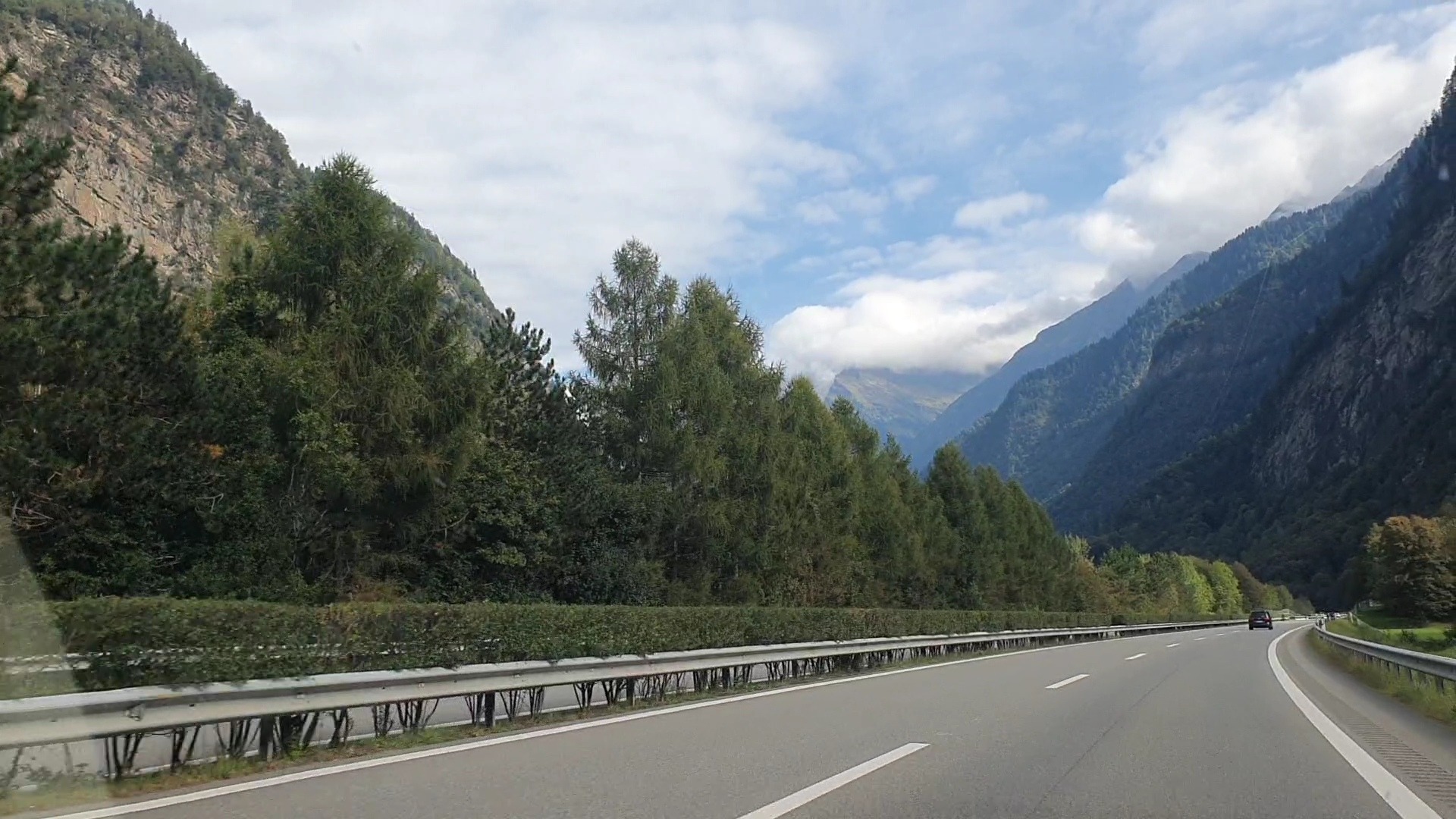
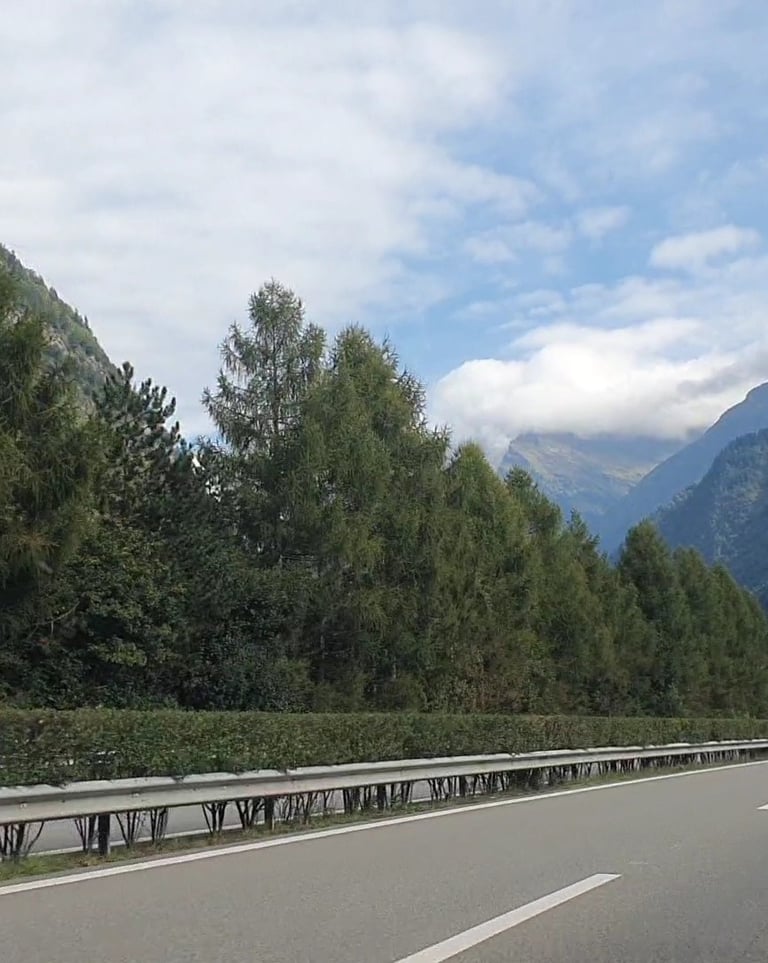
It was time to bid farewell to Italy. It was 7.30am on a foggy September morning, and after a quick coffee and a final check of the apartment, I hit the road, the mist clinging to the hills as Sally guided me out of Genoa, the roads winding upward with a sense of reluctance, mirroring my own feelings. My route home would differ from the outward journey, heading further east to try a different mountain pass and tick off a couple of new countries, aiming first for Liechtenstein before pushing on to Karlsruhe for the night—a solid 500 miles ahead of me.
The autostrada north towards Milan started smoothly, with the fog soon lifting to reveal overcast skies and the familiar foothills, their green slopes a final taste of Liguria. Traffic built around Milan as the city's sprawl slowed me to a crawl, but the views beyond its industrialised suburbs made up for the slow pace as I caught glimpses of Lake Como, where its deep blue waters framed rugged peaks, a serene contrast to the busy autostrada lanes. Entering Switzerland, the landscape softened around Lake Lugano, the water calm amid low, rolling hills dotted with small villages, the scene pretty and peaceful under the overcast sky. I'd planned a final coffee in Italy, but the Swiss border snuck up on me without warning, the signs flipping to multilingual efficiency before I had any chance to stop.
My first real target of the day was the San Bernardino Pass, a historic Alpine trade route dating back to Roman times. The pass was modernised in the 19th century, with the addition of a tunnel in 1967, easing the flow between northern and southern Europe. About 15 miles before the pass, the mountains began to grow taller, their slopes becoming sharper, with patches of blue sky peeking through the grey. The road twisted and turned with challenging hairpins, while the altitude (or maybe the wine in the boot) sapped my Qashqai’s power—I couldn’t be sure which. A small diversion near the top led me onto narrower lanes with tighter bends, where traffic slowed to a crawl, but with the rewarding scenery, it wasn’t an issue; the thick pine forests blanketed the hills, and their scent seeped through my cracked window. I reached the summit at 11.15am, its highest point at 2,066 metres offering a stark, windswept view before we descended into the tunnel. Emerging on the other side, the signs shifted again, this time to Swiss-German, a linguistic border crossing marking a cultural shift.
I stopped for lunch at the services at Parkplatz Viamala Raststätte in Thusis, a pit stop where I grabbed a petrol station sandwich—oh, how I missed the gourmet delights of Italy's Autogrills! The ham, cheese, and egg on seeded bread was simple but satisfying, and I was oddly impressed by the wrapper, where each half of the sandwich was sealed in its own separate triangle of plastic, a genius design in case I should want to keep half fresh for later—an entirely unnecessary invention on this occasion though.
Pressing on, I detoured through Liechtenstein just to add another country to the tally. The tiny principality, wedged between Switzerland and Austria, was sleepy on this Sunday; its capital, Vaduz, was quiet, with little happening. Even the Rhine River, marking its western edge, seemed still and calm. Founded in 1719 as a sovereign state, it's one of Europe's smallest, famed for its banking secrecy and Alpine charm, but for me, it was unremarkable, a box ticked rather than a highlight.
Upon entering Austria, my tenth country of the trip, I stopped at a service station to buy a vignette, the toll sticker that granted me access to the motorways. I also fuelled up in Austria, taking advantage of the cheaper fuel before crossing the border. The roads flowed well at first, but traffic soon built up as I neared Germany, slowing to a frustrating crawl that stretched on for hours. I finally arrived in Karlsruhe around 7pm, after being delayed by multiple jams; the day's 500 miles left me weary, but still with a sense of accomplishment.
My stop for the night was Hotel Santo on Karlstraße, a pleasant hotel with underground parking, its classic facade blending into the city's historic streets. I would leave any exploring until tomorrow, but the view from my window overlooked a wide avenue lined with ornate buildings with red-tiled roofs and timber-framed details evoking Baden-Württemberg's architectural heritage, while tram tracks sliced through the city streets. Karlsruhe, founded in 1715 by Margrave Karl III Wilhelm as a planned "fan city" radiating from his palace, boasts a rich history as a centre of justice and culture and is home to Germany's Federal Court.
Tired from the nearly 12-hour drive, I headed to the hotel bar for a relaxed evening, where a couple of beers hit the spot, their crisp taste reviving me enough to enjoy a Caesar salad of fresh romaine lettuce, tender chicken, croutons, Parmesan shavings, and cherry tomatoes, all tossed together in the signature creamy dressing. An early night followed, with the hum of the city lulling me to sleep, ready for the final push home tomorrow.
To continue reading, head to: Chapter 9: Closing the Circle
Contact
Reach out for questions or collaborations
© 2026. All rights reserved.